Description:
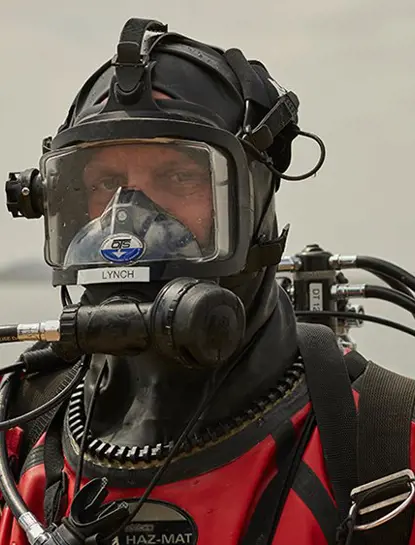
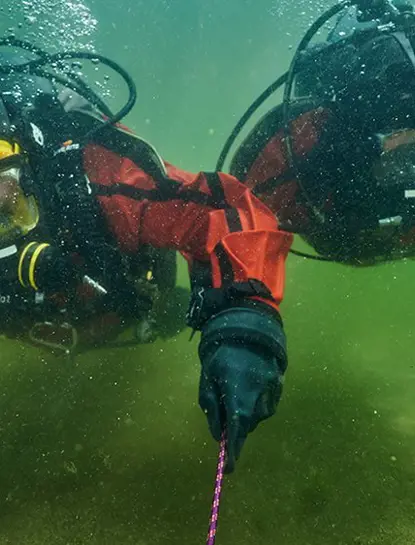
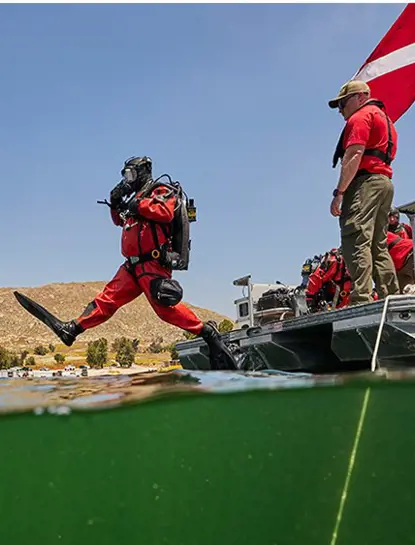
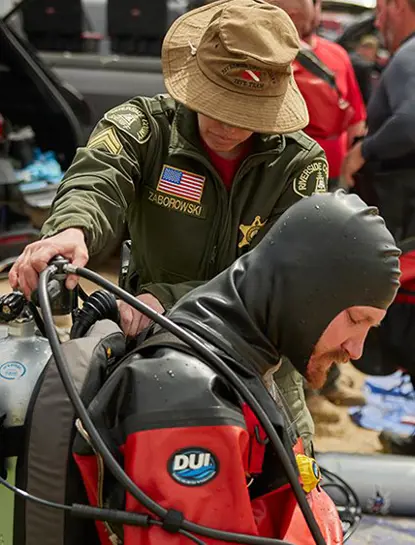
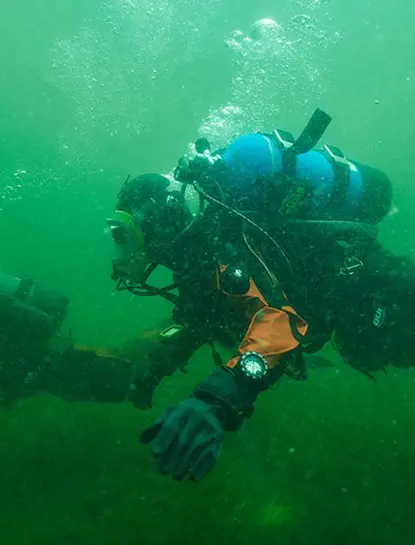
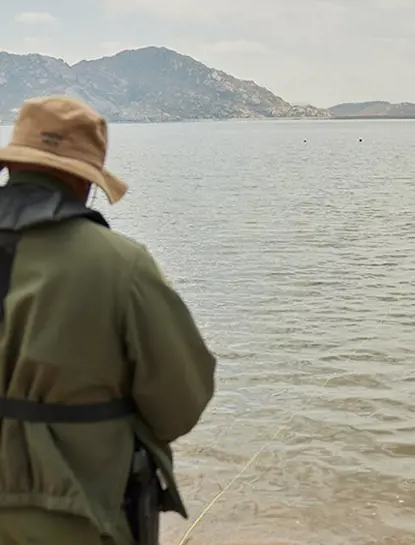
Public safety diving is different from recreational diving in almost every important way. The water is usually black. The conditions are usually bad. The site is often confined, hazardous, or unfamiliar. The objective is rarely sightseeing. The course teaches the role structure that public safety teams use on every operation: primary diver in the water doing the work, safety diver tethered and ready to assist, dive supervisor on the surface running the operation, and surface support handling lines, communications, and logistics. Each role gets practiced.
Scenarios drive the training. Rather than learning skills in the abstract and then trying to apply them, candidates work through realistic situations. Search patterns in low visibility. Tethered communication using line pulls. Surface marker work. Body recovery procedures. Evidence preservation. The mix depends on what the local team responds to most often — coastal teams cover different ground than inland lake teams. The course adapts to the operational environment of the host dive centre.
This is a discipline rating, not a recreational add-on. Candidates are usually already on a public safety team or volunteering with one. The course does not certify you to perform recovery operations independently — that requires the agency you work with to authorise you under their own operational standards. What it does is give you a structured PADI training record that documents your skill development in this niche.


 Technical