Description:
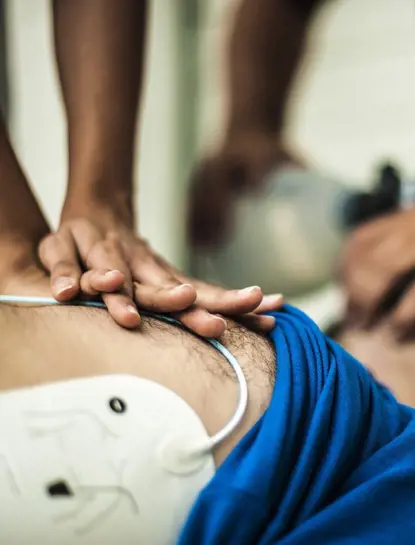
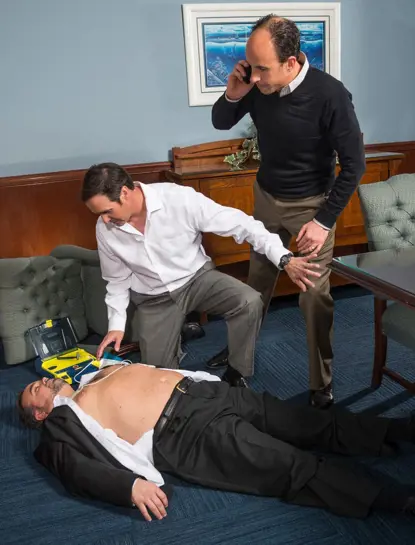
Cardiac arrest is time-critical. Survival rates drop fast in the minutes before professional help arrives, and bystander CPR plus early defibrillation make the largest single difference to outcomes. This course is built around that window. You learn how to recognise cardiac arrest, how to start CPR within seconds of confirming it, and how to operate an AED — the small portable defibrillators now mounted in many public buildings, airports, gyms, and workplaces.
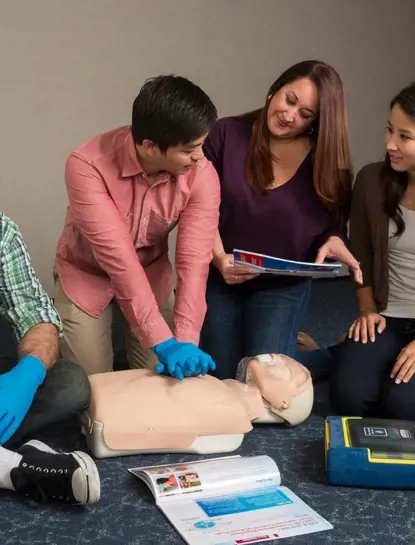
CPR technique is taught two ways. Traditional CPR combines chest compressions with rescue breaths. Hands-only CPR uses compressions alone and is the recommended approach for untrained or unwilling rescuers helping a stranger. Both are practiced on a manikin. The AED training covers how the device walks you through the steps when you turn it on, where to place the pads, and what to do if the device advises a shock. Modern AEDs are designed for bystanders, not professionals. The course reinforces that.
There are no prerequisites and no minimum age. The course is taught by an Emergency First Response Instructor and runs over a few hours or a single day depending on group size. Certification lasts 24 months. If you need first aid plus CPR/AED training to qualify for PADI Rescue Diver or Divemaster, book EFR Primary & Secondary Care instead — that course bundles this one inside a broader first-aid syllabus.



 Technical