Description:
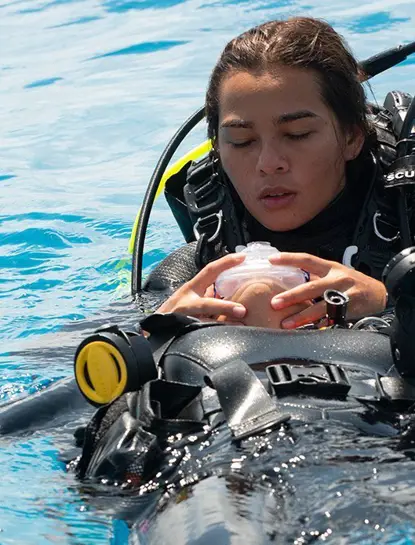
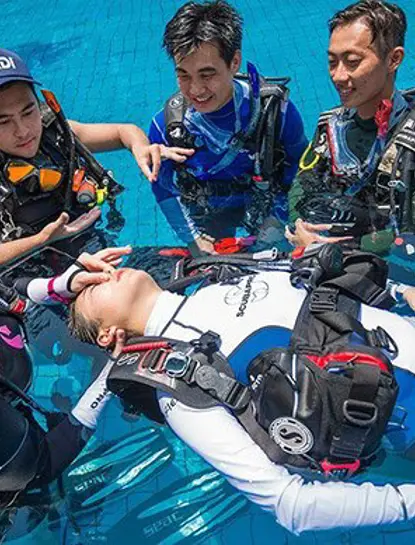
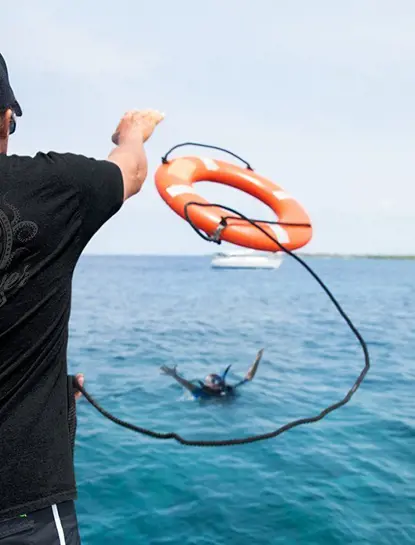
Most divers who finish Rescue Diver say it changes the way they dive. The skills are unlike anything earlier in the recreational ladder. Self-rescue is part of it. Recognising stress in another diver before it becomes a problem matters more, as does handling a panicked diver at the surface, managing an unresponsive diver underwater, running a missing-diver search, and delivering emergency oxygen on the boat. The exercises are demanding because the situations they prepare you for are demanding.
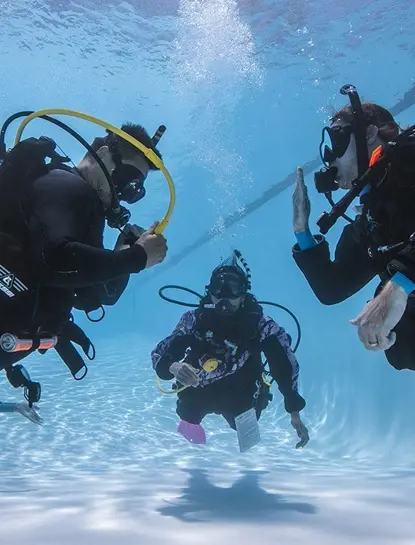
The course is practical above all. Knowledge development covers the theory — stress signals, accident management, decision making under pressure. Most of the time you're in the water doing scenarios. Instructors stage realistic problems, and you work through them with a buddy. The first attempts feel clumsy. That's normal. By the last day the movements feel deliberate, which is how they need to feel when something real actually happens at a dive site.
You need to be at least 12 years old and to hold a PADI Adventure Diver certification, or a qualifying equivalent that includes Underwater Navigation training. A current Emergency First Response certificate, or equivalent CPR and first aid training within the last 24 months, is required. EFR can be earned alongside Rescue Diver if you don't have it yet. Good general health is expected. A medical sign-off from a physician may be needed depending on your history.


 Professional